A Simple, Practical Look at TGI + FastAPI for Local Private Models

01|Why Offline AI Matters
As companies move toward automation, robotics, and stricter data-protection requirements, one trend is becoming obvious:
AI cannot always depend on the cloud.
Warehouses, factories, robots, and internal systems often operate in limited-network or zero-network environments.
For individuals, offline AI also means:
- No risk of data leaving your device
- Zero usage-based fees
- Full control over the system
- The ability to experiment and build your own intelligent tools
This is why I started building my own offline AI stack on my personal machine.
02|The Core Idea: A Small, Local AI System
It consists of only three pieces:
1. TGI — the “engine”
Text Generation Inference loads the model locally and handles all computation.
It works well with models like Mistral, Qwen, or Gemma, and runs fine on a CPU.
2. FastAPI — the “interface”
It receives the user’s question, sends it to TGI, and returns the answer.
This layer makes it possible to connect the model to:
- robotics applications
- dashboards
- internal tools
- web interfaces
- mobile apps
3. Your laptop — the “server”
A normal computer (16–32 GB RAM) is enough to run everything entirely offline.
03|What It Feels Like in Practice
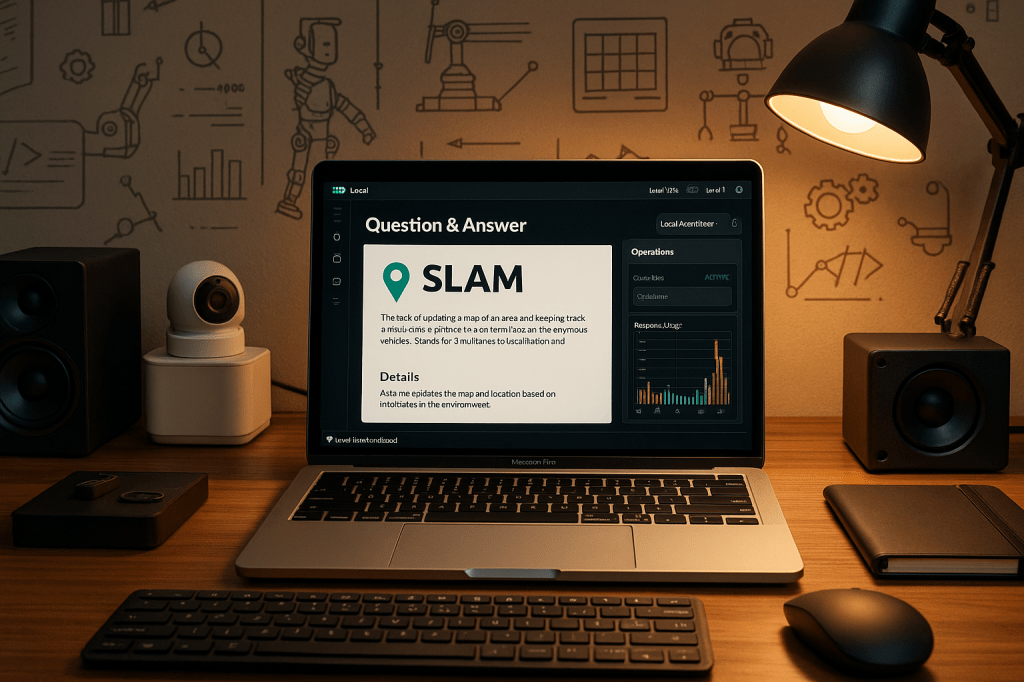
Once the system is running, you simply open a small local webpage and ask a question.
For example:
“Explain SLAM in one sentence.”
And the offline model replies:
“SLAM lets a robot build a map while simultaneously locating itself within it.”
No cloud.
No external API.
No data leaving the machine.
This is exactly the type of setup that future robot applications and industrial systems will rely on.
04|What You Can Actually Do with a Local Model
This small system can already support several real use cases:
- Summarize internal documents and PDFs
- Provide a private Q&A assistant for a team or department
- Power a robot’s decision-making logic in environments without internet
- Enable an offline helpdesk or knowledge terminal
- Test AI features locally before deploying them in production
- Integrate with IoT devices or edge computing hardware
In other words:
It’s a personal “ChatGPT-like engine” designed for real work, not just demos.
05|Why This Approach Will Matter Even More in the Future
My personal observation is that AI will split into two major pathways:
1. Cloud intelligence
Large, powerful, centralized models.
2. Local intelligence
Smaller, specialized, private models running on devices, robots, and internal systems.
Most real-world automation — especially robotics — will require both.
Building this small offline stack gave me a practical understanding of what “local intelligence” actually looks like.
And more importantly, it showed me how easily it can be integrated into real workflows and future products.
Closing Thoughts
Running AI offline is not about avoiding cloud services.
It’s about flexibility:
- building tools that work anywhere
- protecting sensitive information
- reducing dependency on external providers
- enabling robotics and industrial automation in real environments
- prototyping serious ideas with your own hands
This small TGI + FastAPI setup is only the starting point, but it already represents a practical, future-oriented building block for intelligent systems — from personal tools to full robotic applications.

 wuenqiinsights
Leave a comment